

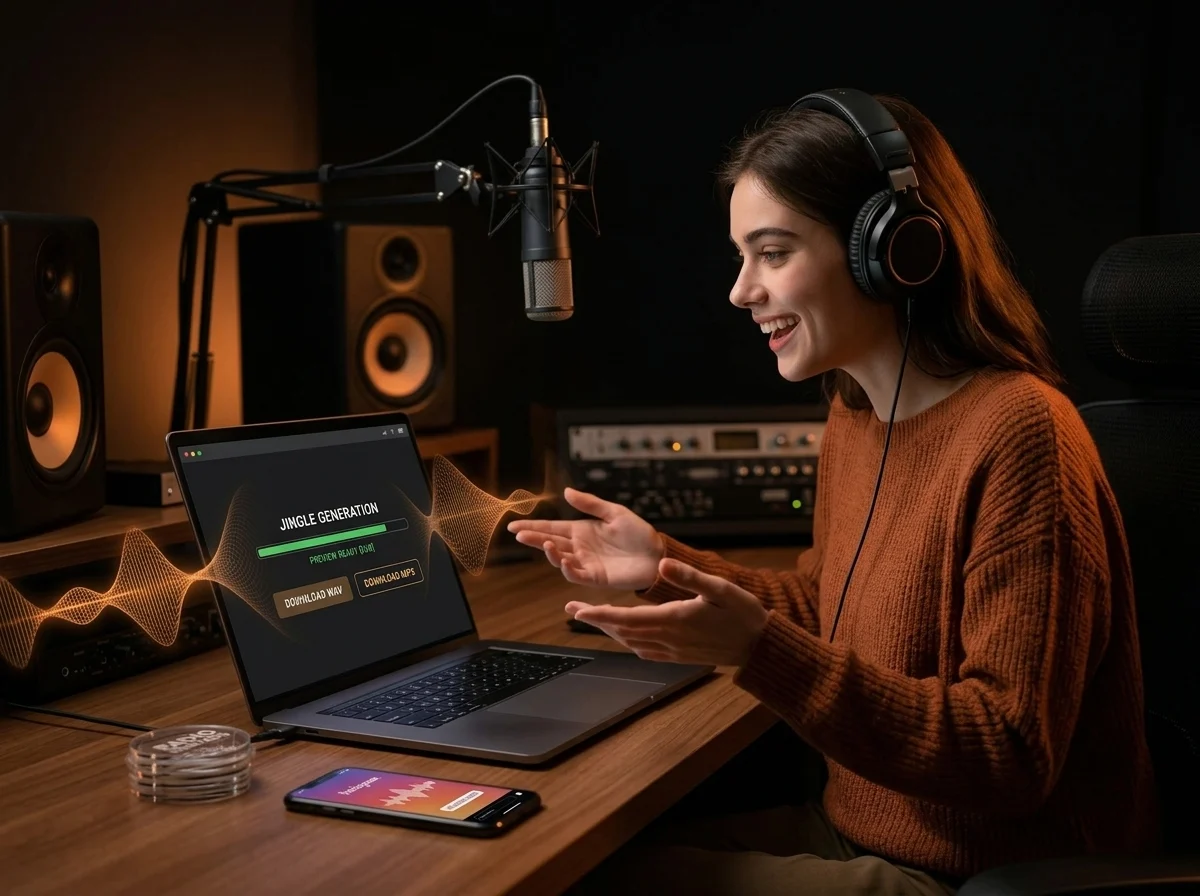

Anyone who has pitched an audio spot knows the awkward moment. You have a script on the screen, a few lines of sung copy, and a client trying to imagine how it will sound. You hum the melody, describe the vibe, and watch their face go blank. Words on a slide rarely sell a sound.
Small agencies and in-house teams now have a cheaper way past that moment. Feed your copy into Nafy, a web-based AI song generator, and a rough jingle can go from typed lyrics to a playable sketch during the same afternoon you wrote the copy. Nobody is trying to replace singers, composers or studios here. The point is to walk into the review meeting with something people can actually listen to.
Below is a practical workflow for using AI music as a prototyping layer in ad production, plus the guardrails that keep it professional.

Why sketches win approvals
Clients approve what they can react to. A mock-up of a banner ad gets better feedback than a description of one, and audio works the same way. When stakeholders hear a draft, the comments become specific: the tempo feels sleepy, the brand name falls on a soft beat, the chorus should come in sooner. Those notes are gold, and you want them before anyone pays for studio hours.
A prototype also protects the creative team. If the client wanted bright ukulele pop and you were imagining moody synthwave, it is far better to find out with a sketch than after a full session.
Step one: write copy that can be sung
Ad copy and song lyrics follow different rules. A tagline that reads well can still trip a singer if it crowds too many syllables together. Before generating anything, try these checks:
- Count the beats. Say the line aloud while clapping. If the brand name gets squeezed between claps, rework the sentence.
- Let the name close the phrase. Listeners hold on to whatever word finishes a line.
- Cut filler. Words like “really,” “truly” and “very” eat space without adding meaning.
- Repeat on purpose. A jingle can say the hook twice. Repetition that would look lazy in print feels catchy in sound.
Label sections as verse and chorus if your spot has more than one part. Even a 30-second ad benefits from a clear structure.
Step two: generate several directions
On Nafy’s homepage you can either paste lyrics or describe a track in plain language, then shape the style, instruments, tempo and vocal type. Vocal options include male, female, a surprise-me mode and pure instrumentals.
Treat this stage like a mood board. Make three or four contrasting versions of the same lyrics rather than one polished take. For a neighborhood bakery, you might try:
- Warm acoustic folk with hand claps and a friendly female lead.
- Retro doo-wop with stacked harmonies.
- Upbeat indie pop at a brisk tempo.
- An instrumental bed with the tagline left for a voice actor to read.
Play them back to back. One will usually feel right for the brand within seconds, and the others still help, because they show the client what you ruled out and why.
Step three: hear it in the voice you plan to cast
Here is where many prototypes fall short. The client approves a demo sung by a generic voice, then the final recording with the hired singer feels different, and the approval process starts over.
The AI singing voice generator on Nafy can narrow that gap, provided the singer agrees. Think of it as voice conversion rather than a text-to-voice engine, and the process has two stages. First, a model is built from a short sample of the singer: somewhere between ten seconds and five minutes of dry, isolated singing. WAV or FLAC files are preferred, and any backing track, room noise or effects should be stripped out beforehand. Nafy estimates training and conversion at around 5 to 15 minutes. Second, you choose that model, supply a track where someone is already singing, and press Transform Vocals. The original tune and timing survive, while the pitch character, timbre and tone shift toward the trained voice.
For an agency, that means you can take your favorite draft from step two and preview it in the color of the session singer you intend to book. The model is saved to your account and can be reused on other songs, which helps when a campaign needs several spots.
Consent comes first
Only train a model on a voice when its owner has said yes, in writing, for this specific use. A session singer’s voice is part of how they earn a living. Make the agreement clear: the conversion is for internal and client review, it will not air, and the real recording will be paid for as usual. Never train on a celebrity, a competitor’s spokesperson or any voice pulled from a published recording. Beyond the legal risk, nothing burns trust faster in an industry that runs on relationships.
The same caution applies to music. If your draft borrows a melody from an existing hit, a sketch is still a copy, and nothing about it would be safe to broadcast.
Step four: run a tighter review
Bring the sketches to the client meeting with a short agenda:
- Play the chosen direction first, without explanation.
- Ask what the listener remembers. If nobody recalls the brand name, the copy needs work.
- Play one alternative so the decision feels like a choice rather than a default.
- Write down timing notes in seconds so the composer and singer can act on them.
Present every sketch as exactly that. Label files clearly as drafts, and say in the meeting that the final will be produced and performed by people.
Step five: hand off to production
Once the direction is approved, the prototype becomes a reference track. A composer gets a clear target for tempo and feel. The singer hears the phrasing everyone agreed on. The producer knows how long the sung part runs and where the voiceover sits. Briefs become shorter, and the first studio take tends to land closer to the mark.
Where this approach fits
Prototyping with AI works best for regional radio, podcast ad reads with a musical tag, social video spots, in-store announcements and seasonal promotions where turnaround matters. It is less useful when a brand already owns a famous sonic logo that must be reproduced exactly; there, the original composer should be involved from day one.
The bottom line
The cost of a bad audio idea is rarely the idea itself. It is the studio session, the revisions and the lost week. A ten-minute sketch that everyone can hear moves that risk to the cheapest part of the process. Write singable copy, explore a few directions, preview the voice you plan to cast with permission, and let the people who make the final record do what they do best.






Leave a Reply
You must be logged in to post a comment.